Rail Use Case - Arnhem Project
Challenge
Public transport networks are increasingly constrained by the mismatch between rising energy demand and limited grid capacity. As passenger volumes grow and routes become busier, the traction network experiences sharp fluctuations in power usage. When a trolleybus brakes -especially on downhill sections- substantial energy is released but currently lost as heat. When that same vehicle accelerates again, it draws a short but intense power peak from the grid. These peaks contribute to voltage dips, place stress on the traction network, and consume valuable connection capacity in regions already struggling with grid congestion.Upgrading the urban grid is expensive, slow, and often impractical, which makes the optimization of existing energy use increasingly important. To explore alternative solutions, QuinteQ was awarded the Growth Accelerator Demonstration Energy voucher to work within the Arnhem trolleybus network as part of the national “Energy in Public Transport” initiative, a collaboration between major rail and public transport partners in the Netherlands, including ProRail, GVB, HTM, RET, Connexxion, Qbuzz, Strukton, and others.
Objective
The project is currently developing a detailed energy profile of the Arnhem network to pinpoint where flywheel energy storage can deliver the greatest value. Data is being gathered on downhill braking events, acceleration peaks, and voltage behavior along the route. By mapping these patterns, the QuinteQ team is determining how much braking energy can be recovered at specific locations, how often peak loads exceed available capacity, and where voltage fluctuations pose operational risks. This analysis will feed directly into a practical integration plan that uses the flywheel to reduce peak demand, stabilize voltage, and support future network expansion without requiring a larger grid connection.
Solution & Results
At the core of this approach is what the flywheel can actively do for the traction network. When trolleybuses brake, the flywheel captures the otherwise-wasted energy and stores it with very high efficiency. When they accelerate again, the flywheel releases this stored energy instantly, dramatically reducing the power that needs to be drawn from the grid precisely at the moments of highest stress. By smoothing these rapid load swings, the flywheel helps prevent voltage dips, improves local power quality, and relieves pressure on the existing infrastructure.
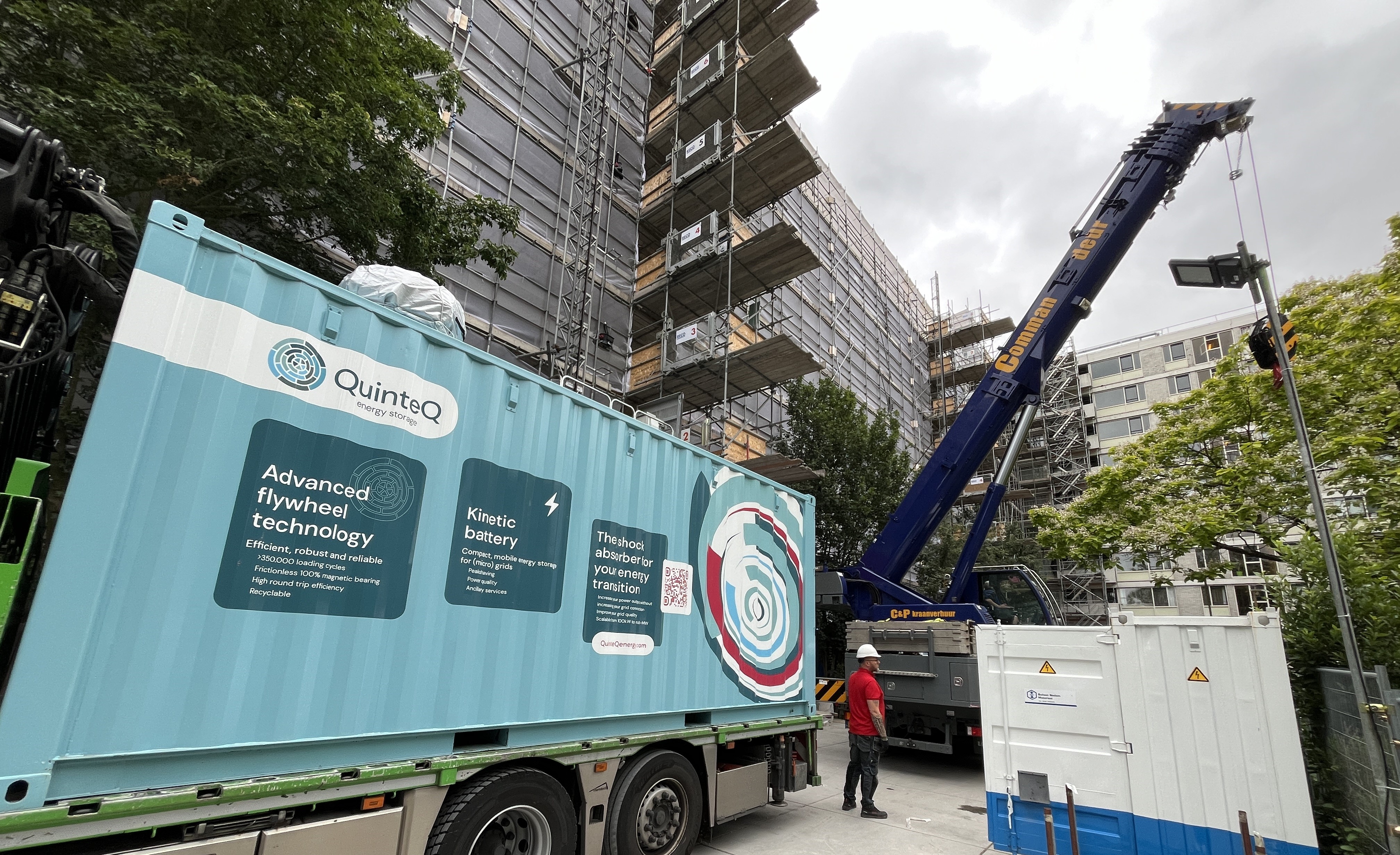
QuinteQ’s THOR flywheel system is specifically designed to operate without additional transformers and integrates directly into the existing traction network. Its fast-response capability enables it to absorb sudden load spikes and inject power back into the system at exactly the right moment, effectively shaving peak loads and maintaining stable voltage levels across the grid. This makes the flywheel a powerful solution for managing increasing electrification demands while keeping the network reliable, efficient, and ready for future growth.